






Ingredients
For the dough:
- Flour: 800 g – 1 kg (high-quality)
- Warm water or milk: 500 ml (milk makes the dough softer)
- Dry yeast: 1 tablespoon
- Salt: 1 teaspoon
- Sugar: 1 teaspoon (to activate the yeast)
- Oil or melted butter: 50 ml
For the filling:
- Imeretian cheese: 1 kg (preferably moderately salty and well-melting/stretchy)
- Egg: 1 (to bind the cheese mixture)
- Butter: 20–30 g (if the cheese is dry)
- Preparing the Khachapuri Dough
Dissolve the yeast, sugar, and 2 tablespoons of flour in warm milk or water. Let it stand for about 15 minutes, until bubbles appear on the surface.
In a large bowl, add most of the flour, then add the salt and the yeast mixture, and begin kneading.
During the kneading process, gradually add the oil. The dough should turn out very soft, elastic, and slightly sticky to the touch.
Cover the bowl with a cloth and place it in a warm spot for 1–1.5 hours, until the dough doubles in size.
2.Preparing the Filling
Crumble the cheese well by hand or grate it using a coarse grater.
Add one egg and softened butter. Mix thoroughly until you get a smooth, uniform mixture.
Form the mixture into balls (the same size as the dough balls).
3. Assembling the Khachapuri
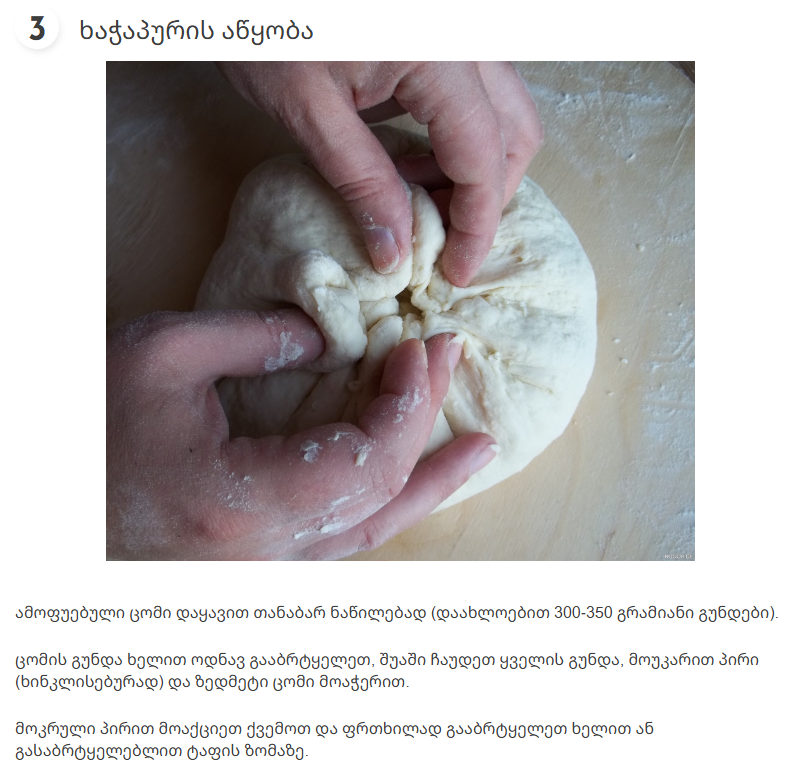
Divide the risen dough into equal portions (about 300–350 g each).
Gently flatten each dough ball by hand, place a cheese ball in the center, gather the edges together like khinkali, and pinch to seal. Trim off any excess dough.
Turn the sealed side down and carefully flatten with your hands or a rolling pin to the size of the pan.
4. Baking
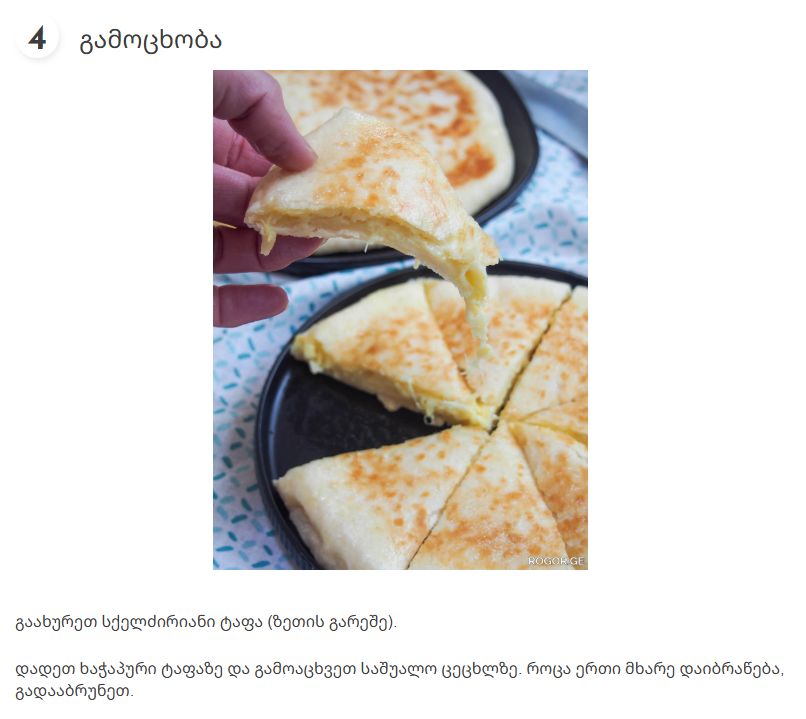
Heat a heavy-bottomed pan over medium heat (without oil).
Place the khachapuri in the pan and cook over medium heat. Once one side turns golden brown, flip it over.
As soon as you remove it from the pan, brush the hot khachapuri with butter on top.
5. How to Choose the Right Cheese
Choosing the right cheese accounts for about 70% of a successful khachapuri. For Imeretian khachapuri, fresh Imeretian cheese (chkinti) is ideal, but there are several important nuances to consider:
1. Texture and “Stretchiness”
Authentic khachapuri cheese should be rich and tender.
If the cheese is too dry, it will crumble during baking and won’t stretch.
Tip: If the cheese seems dry, be sure to mix in 1 egg and 20–30 g of softened butter. This will give the filling elasticity.
2. Salt Balance
The cheese should not be overly salty.
If the cheese is too salty, cut it into pieces and soak it in cold water for 2–3 hours (or in milk for 1 hour). This will draw out excess salt.
Ideal option: The cheese should have a moderate, pleasant saltiness.
3. Mixing Sulguni and Imeretian Cheese
Many cooks prefer a blend of Imeretian cheese and Sulguni (in a 70/30 or 50/50 ratio).
Imeretian cheese provides the traditional flavor and aroma.
Sulguni ensures that beloved stretchy effect.
4. How to Check the Quality
When buying cheese, look for the so-called “holes.”
Imeretian cheese should have small, evenly distributed holes.
If the cheese releases juice (whey) when pressed, it means it’s fresh and will make the khachapuri very juicy.
Professional tip: Always taste the cheese mixture before placing it into the dough. It should have a slightly tangy-salty flavor. If the cheese is bland, the khachapuri will be bland too, no matter how good the dough is.